Introduction
Want to protect your wrists during workouts, ball sports, or everyday training? It's not difficult. A proper roll of athletic tape can provide the support and stability you need. As a professional tape manufacturer, L WELL recommends learning the correct taping techniques-this guide will walk you through how to properly wrap your wrist with athletic tape.

Why You Should Use Athletic Tape for Wrist Support
The wrist is required to exert continuous force in various sports. Whether it's weightlifting, tennis, CrossFit, or daily fitness training, almost all upper limb movements rely on its involvement. However, the wrist joint has a delicate structure and is frequently used. If it is subjected to repeated pressure or lacks sufficient support, it is prone to problems such as strains and sprains.
Using athletic tape for wrist support can help:
• Provide additional stability to the wrist, limiting excessive movement and reducing the risk of injury;
• Deliver gentle compression to promote blood circulation and support post-workout recovery;
• For professional athletes and those who regularly engage in strength training, the correct use of sports tape can not only improve stability and performance but also provide reliable protection during high-intensity exercise.

What You'll Need to Wrap Your Wrist with Athletic Tape
Before you begin wrapping your wrist, make sure you have the following materials ready:
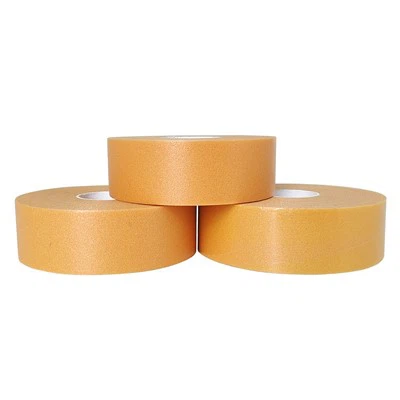
✅ Athletic Tape: Choose a durable, skin-friendly tape, such as the L WELL athletic tape series, which provides excellent adhesion and flexibility without irritating the skin.
✅ Scissors: To cut the tape to the desired length.
✅ Optional Pre-Wrap: A thin, soft foam or cloth tape that sits between the skin and athletic tape. It is suitable for individuals with sensitive skin or those who want extra comfort and protection under the tape.
Step‑by‑Step Guide: How to Wrap Your Wrist with Athletic Tape
Proper wrist taping provides effective support, reduces the risk of injury, and maintains flexibility during activity. The following are the detailed steps:
Step 1: Apply Pre‑Wrap (Optional)
Before taping, you can wrap a layer of pre‑wrap around the wrist and hand, starting from the forearm near the wrist and circling over the wrist and palm. This protects the skin and reduces friction or pulling, but it may slightly reduce the tape's adhesion.
Step 2: Apply Anchor Strips
Wrap a strip of tape around the forearm to form the wrist anchor, then another around the hand (between the thumb and index finger) to form the hand anchor. When folding the tape, slightly avoid the thumb web space to maintain comfort and thumb mobility.
Step 3: Apply X Strips
Place two diagonal strips between the anchor points, crossing to form an "X" that limits excessive wrist movement. Applying an X to the back of the hand prevents excessive palmar flexion, while applying an X to the palm prevents excessive dorsiflexion.
Step 4: Apply Figure‑8 Wrap
Start from the hand anchor at the base of the palm, wrap the tape across the palm between the thumb and index finger, then around the back of the hand and return to the wrist, forming a figure‑8 pattern. Continue wrapping in a circular motion up the wrist until it is fully covered.
Step 5: Cover the Open Area Below the Thumb Base
If there is a gap below the thumb base, start from the hand anchor at the base of the palm and wrap a strip around the thumb base, returning to the anchor point on the back of the hand. Then apply two two more tapes, each overlapping half of the previous one, until the area below the thumb base is fully covered.
Step 6: Finish with Three Additional Figure‑8 Wraps
Finally, start from the hand anchor at the base of the palm and perform three consecutive figure‑8 wraps, each covering the palm and wrist. After the third wrap, continue upward to the wrist anchor, providing full support for the wrist.

Tips and Common Mistakes
• Don't wrap too tightly-reduced circulation can cause discomfort.
• Replace the tape after intense workouts or sweating to maintain effectiveness.
• Use elastic or breathable tape for longer training sessions to keep your skin comfortable.
Conclusion
By mastering the proper athletic tape wrapping techniques and paying attention to tape tension, finger mobility, and blood circulation, you can provide effective support for your wrists during exercise, reduce the risk of injury, and maintain flexibility.
L WELL: Your Trusted Partner for Wrist Support
L WELL offers high-quality athletic tape, specifically designed for wrist and sports protection, providing reliable support during training and competition. Contact us today to learn more about our products and receive professional guidance, helping you stay safe and perform at your best during exercise.