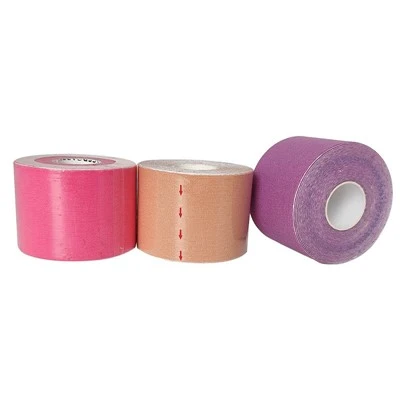
Kinesiology tape, as a niche category within the medical tape market, is widely used due to its non-pharmacological intervention properties. Data shows that the global medical gauze and tape market generated revenues of 6.5022billion in2020 and isprojected toreach 8.6993 billion by 2027, with a compound annual growth rate (CAGR) of 4.2% from 2021 to 2027. This article will explain how kinesiology tape achieves multi-scenario applications through biomechanical principles.
What is Kinesiology Tape?

Kinesiology tape is an elastic medical tape composed of three layers: breathable cotton fabric, wavy medical adhesive, and a backing paper. It mimics the elasticity of human skin and adheres to joint movements. Invented in 1973 by Dr. Kenzo Kase in Japan, it was initially used for alleviating arthritis pain and gained public attention after being widely used by athletes during the 2008 Beijing Olympics. Unlike ordinary bandages, its primary function is to stimulate nerve feedback and promote local circulation by moderately lifting the skin, rather than merely immobilizing joints.
Correct Usage Methods
1. Preparation Before Application
Cleaning and Cutting Clean and dry the skin before use to avoid oil affecting adhesion. Cut the tape into appropriate shapes based on the area to be taped: I-shaped tapes for linear muscle support (e.g., posterior thigh), Y-shaped tapes for wrapping joints (e.g., shoulders), and claw-shaped tapes for distributing pressure (e.g., swollen ankles).
2. Application Steps
Stretching and Positioning Control the stretch of the tape during application: slight stretching is sufficient for muscle support, while joint stabilization requires maintaining a natural state. For example, when taping the knee, fix both ends first, then stretch the middle part to form a "teardrop" shape to cushion pressure. After applying, rub the tape with hands to enhance adhesion using body heat.
3. Common Mistakes and Risks
Avoid prolonged use leading to skin irritation; do not leave tape on for more than 24 hours. For sensitive skin, choose low-allergy tape and test on the inner forearm first. Do not use on open wounds, eczema, or infected areas.

Application Scenarios

1. Sports Protection
In high-intensity sports like basketball and running, preemptively taping ankles or knees can reduce sprain risk by distributing pressure.
2. Medical Rehabilitation
Post-surgery or acute injury, the tape can replace some protective gear functions. Patients with rotator cuff injuries use cross taping to enhance joint stability, while those with plantar fasciitis use claw taping to guide lymphatic drainage, shortening recovery time.
3. Daily Health Care
Office workers who sit for long periods can apply Y-shaped tape to both sides of the cervical spine to relieve neck and shoulder fatigue. Elderly individuals with knee degeneration can use circular taping to improve local blood circulation and delay pain onset.
Conclusion
The above content illustrates that kinesiology tape, leveraging scientific principles and flexible applications, has extended from professional fields to general health scenarios, becoming a practical tool for sports protection, rehabilitation, and daily healthcare. Users can follow these guidelines to maximize the benefits of kinesiology tape.
LWELL: Professional Kinesiology Tape Manufacturer
As a professional supplier of medical tapes and bandages, LWELL offers high-quality kinesiology tape and can customize products according to your needs. If you have any questions about our products, please feel free to contact us!