Introduction
When sourcing Vet Wrap Bandages, buyers can choose an existing product or work with a manufacturer on a customized solution. Both options can support wholesale distribution and branded product lines, but they involve different levels of product development, flexibility, and purchasing commitment.
The decision is not simply whether to buy a standard product or put your own logo on one. Buyers need to consider whether the available specifications suit their target market, which product features actually require customization, and whether the additional investment in OEM production will create enough commercial value.
Understanding Ready-Made and OEM Vet Wrap Bandages
Ready-Made Vet Wrap Bandages
Ready-made Vet Wrap Bandages are products already included in a manufacturer's range. Buyers select from existing specifications, materials, colors, and packaging options rather than developing a product from the beginning.
L WELL offers Vet Wrap Bandages made from nonwoven fabric and spandex, with different width and color options. Depending on the available product, buyers may also consider adhesive and other product variations. Explore L WELL's Vet Wrap Bandages to review the existing options.
For wholesalers and distributors, the main advantage is that product selection can begin with an established specification. There is less need to define every product detail or coordinate development before moving forward.
One distinction matters when planning an order: ready-made refers to an established product, not necessarily stock available for immediate dispatch. Production schedules and delivery arrangements still depend on the selected product and order requirements.
OEM and Private Label: What's the Difference?
OEM production allows buyers to request product specifications or features beyond the manufacturer's existing range. Depending on the project, this may involve changes to materials, dimensions, colors, printed designs, or other product characteristics.
Private labeling is more straightforward. A buyer uses an existing product and adds their own logo, brand identity, or packaging. It does not automatically require broader product development.
For example, a distributor may find that an existing Vet Wrap specification suits its market but wants the product supplied under its own brand. Private labeling may be sufficient. A brand that needs a different material combination, dimensions, or product design may need a more extensive OEM arrangement.
L WELL supports customization of materials, dimensions, logos, and graphic printing. Buyers can explore L WELL's customization capabilities to understand the options available for different product requirements.
When Ready-Made Vet Wrap Bandages Make More Sense
Existing Products Meet Your Market Requirements
Ready-made products are a practical choice when the manufacturer's existing range already matches the intended application and customer expectations. The important task is to evaluate the product against actual sales requirements rather than assuming that a customized version will automatically be better.
For Vet Wrap Bandages, buyers can start by reviewing several product details:
- Material and construction: Check whether the nonwoven fabric and elastic construction suit the product requirements of your market.
- Width and length: Consider the sizes your customers commonly request and whether the available options cover those needs.
- Adhesive options: Determine whether the available adhesive type, including latex or latex-free options where offered, matches your product range requirements.
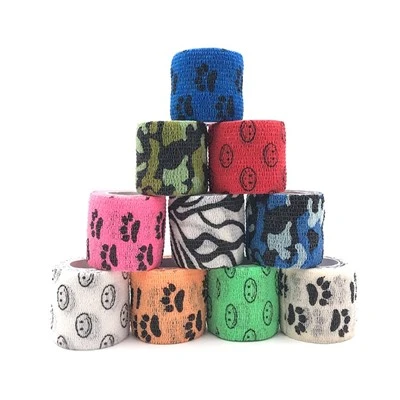
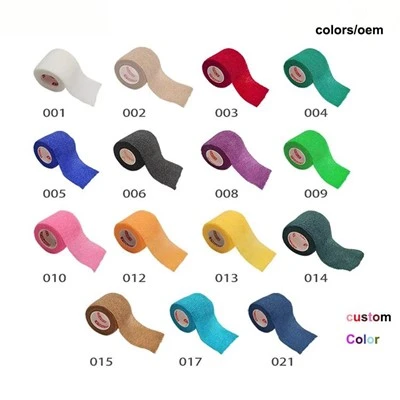
- Appearance: Review available colors and printed designs if product presentation is important to your brand or customers.
- Branding and packaging: Establish whether existing private-label options are sufficient.
These details help identify whether a standard product is genuinely suitable. If the available specifications meet the requirements, developing a different version may add cost and lead time without improving the product's value to customers.
You Want to Test Demand Before Developing a Product
For a new Vet Wrap product line, starting with an existing specification lets distributors test customer acceptance before investing in product development.
This is particularly useful when the target market is not yet clearly defined. A distributor may know that veterinary clinics or animal-care suppliers need cohesive bandages but have limited information about which widths, colors, or product variations will sell consistently.
Rather than developing several customized versions at the outset, the business can begin with suitable existing options and observe actual order patterns and customer feedback. If buyers repeatedly request a feature that the standard range cannot provide, OEM development becomes a more informed next step.
This approach also helps avoid unnecessary product variations. A broader range may look attractive in a catalog, but each additional specification can create more decisions around inventory, order quantities, and product management.
When OEM Vet Wrap Bandages Are Worth the Investment
Standard Specifications Cannot Meet Specific Requirements
OEM is worth considering when the manufacturer's existing range lacks features that are important to your target market.
For example, a buyer may need a particular material combination, dimension, color, or printed design that is unavailable as a standard option. If the requirement affects product suitability or is essential to a customer's purchasing specification, selecting the closest available product may not be enough.
The scope of customization matters. Not every change requires the same level of development:
|
Requirement |
Possible approach |
|
Adding a brand logo to an existing product |
Private labeling |
|
Using branded packaging |
Private labeling or packaging customization |
|
Selecting from available colors |
Existing product option |
|
Requesting a color or printed design outside the standard range |
Customization or OEM, depending on the work involved |
|
Changing material composition or product dimensions |
Broader product customization |
The exact arrangement depends on the manufacturer's capabilities and the requested changes. Defining these requirements before requesting a quotation helps both parties understand whether the project involves simple branding or actual product development.
Your Product Range Needs a Distinct Identity
OEM may also make sense when a customized product can support a clear market position.
A veterinary supply brand developing its own Vet Wrap range, for instance, may want consistent colors, printed designs, or product specifications across multiple items. A distributor serving a particular customer group may need a product that differs from the standard options commonly available in its market.
The value of customization is not measured by how many features are changed. It comes from whether those changes solve a real problem or give customers a reason to choose the product.
Before committing to OEM, buyers should identify the purpose of each requested change:
- Does it meet a requirement that existing products cannot satisfy?
- Does it help establish a recognizable product range?
- Is it requested by actual customers or based only on an assumption about market preference?
- Will the expected sales value justify the additional development and purchasing commitment?
If the requested changes do not provide a meaningful advantage, a standard product with private labeling may be the more sensible option.
Comparing Ready-Made and OEM Purchasing Costs
Key Differences Between the Two Models
The cost difference between Ready-Made and OEM is not limited to the unit price. The amount of development work, the scope of customization, and the production arrangements can all affect the overall purchasing commitment.
|
Purchasing factor |
Ready-Made |
OEM |
|
Product basis |
Manufacturer's existing range |
Product developed or adjusted to buyer requirements |
|
Specifications |
Select from available options |
Customized requirements may be accommodated |
|
Branding |
Existing private-label options |
Branding can be included in the project |
|
Development |
Usually limited |
May require additional development work |
|
Cost structure |
Based mainly on the selected product and order |
May include customization and development costs |
|
MOQ |
Depends on the product and order arrangement |
May be affected by customized materials, colors, or designs |
|
Lead time |
Depends on availability and production arrangements |
May require additional preparation and production time |
Ready-made products generally involve fewer development steps when existing specifications are suitable. OEM offers more flexibility, but changes to materials, dimensions, or printing may require additional coordination and affect the order commitment.
What to Check When Comparing Quotations
When comparing quotations, buyers should look beyond the quoted unit price. The following details can make a meaningful difference:
- MOQ by specification: Check whether the minimum order quantity applies to the overall order or separately to each size, color, or design. This is particularly important when planning a range with several variations.
- Customization charges: For OEM orders, distinguish the cost of the product from additional charges associated with material changes, printing, or packaging. Ask which requested changes are included in the quotation.
- Production and delivery schedule: An existing product may involve fewer preparation steps, while customized specifications can require additional coordination before production. Compare the expected schedule rather than assuming both models have the same lead time.
- Total order commitment: A customized product may have a higher initial cost but better suit a defined customer requirement. Conversely, paying for customization that customers do not value can make the project less economical.
The better purchasing model is the one that meets the required product specifications at a commercially reasonable cost, not necessarily the one with the lowest initial quotation.
Conclusion
Ready-Made Vet Wrap Bandages are a practical starting point when existing specifications and branding options meet your market requirements. OEM becomes more valuable when standard products cannot satisfy important product needs or when customization supports a clear commercial advantage.
If you are comparing existing options with a customized product, contact L WELL to discuss your Vet Wrap requirements and explore a suitable approach for your product range.