Introduction
In tennis, fingers frequently endure the impact of gripping rackets, friction, and sweat erosion. Many professional players, such as Nadal and Zheng Qinwen, often suffer from finger injuries due to high-intensity training, including blisters, tendonitis, and more. To prevent these injuries, athletes need some professional protective gear. This article will analyze the reasons why tennis players use cohesive bandage, starting from the types and functions of the protective gear.
Main Types of Tennis Finger Protective Gear

1. Cohesive Bandage
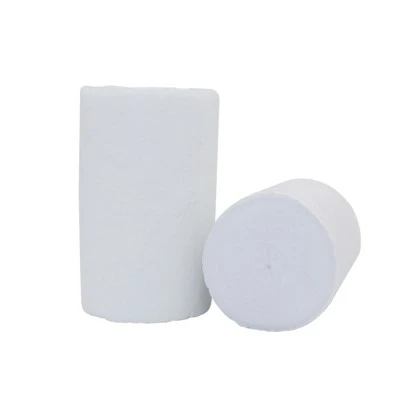
Cohesive bandages are made of elastic fibers and breathable antibacterial materials, with a self-adhesive layer on the surface that allows them to firmly wrap around the fingers without the need for additional glue. Their elastic design closely fits the skin, neither limiting movement nor reducing the friction between the fingers and the racket, thus preventing blisters and skin abrasions. Additionally, the bandages' sweat-absorbing function keeps the hands dry and avoids slippage when gripping the racket.
2. Silicone Finger Caps
Silicone finger caps are made of soft and durable medical-grade silicone, covering the fingertips or joints. They have a moderate thickness that can cushion the impact during ball contact, reducing the pressure of the hard racket handle on the skin. This type of protective gear is especially suitable for players who train for long periods, as it can prevent nail cracking or deformation. However, their breathability is slightly inferior to that of cohesive bandages.
3. Anti-Slip Pads
Anti-slip pads are based on ultrafine fibers, with an anti-slip particle coating on the surface, and are directly applied to the fingers or racket handles. They can significantly enhance friction, especially in humid environments, reducing ball control errors caused by sweaty hands. However, the protection range of anti-slip pads is relatively small, and they usually need to be used in combination with other protective gear.
Why Do Tennis Players Choose Cohesive Bandage?
1. Lightweight Design
Cohesive bandages are thin and hardly affect the touch of gripping the racket after wearing. Players can accurately perceive the vibration of the racket handle and maintain high sensitivity during matches. In contrast, silicone finger caps or compression bands may reduce hand sensitivity.
2. Multifunctional Protection
Cohesive bandages can simultaneously address three major issues: friction, sweat, and joint stability. In high-temperature matches, they can not only absorb sweat and prevent slippage but also protect the joints through elastic pressure, equivalent to a combination of multiple protective devices.
3. Flexible Adaptation to Different Scenarios
Players can cut the bandage to the desired length, wrapping either just the fingertips or entire joints. During serves, focus on protecting the base of the index finger; during volleys, strengthen support for the ring finger. This ability to freely adjust makes cohesive bandages a versatile choice for both training and matches.
4. Cost-Effective and Easy to Replace
A single cohesive bandage can be reused multiple times, and the cost per use is lower than that of silicone finger caps and other protective gear. When players frequently change protective gear during training, the high cost-performance advantage of bandages becomes even more evident.

Conclusion
The above content illustrates that finger protective gear is extremely important for tennis players, and cohesive bandages have become the preferred choice for athletes due to their lightweight, multifunctional, and strong adaptability. Whether it is preventing friction injuries, keeping hands dry, or flexibly responding to different match scenarios, they provide reliable protection.
LWELL: Professional Cohesive Bandages Manufacturer
As a professional supplier of medical tapes and bandages, LWELL offers cohesive bandages in various materials and can customize products according to your needs. If you have any questions about our products, please feel free to contact us!