Introduction
Choosing a veterinary cohesive bandage supplier involves more than comparing product catalogs and wholesale prices. For importers, distributors, wholesalers, and private-label brands, supplier evaluation should cover product suitability, material consistency, quality control, manufacturing capacity, and the ability to support repeat orders.
Before placing a bulk order, buyers need to determine whether a supplier's products and manufacturing processes meet their requirements. The following seven factors provide a practical framework for assessing supplier capabilities, reviewing supporting evidence, and identifying potential sourcing risks.
Product Requirements and Veterinary Application Experience
Check the Supplier's Veterinary Product Range
A manufacturer experienced in adhesive tapes is not automatically experienced in veterinary cohesive bandages. The products may serve different purposes and require different material and adhesive arrangements.
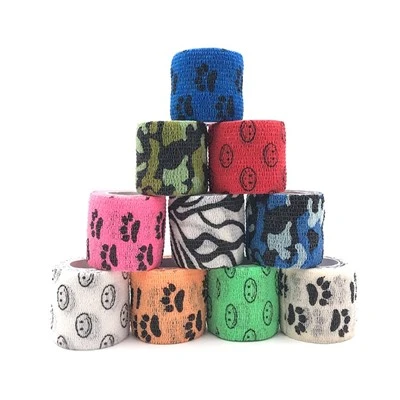
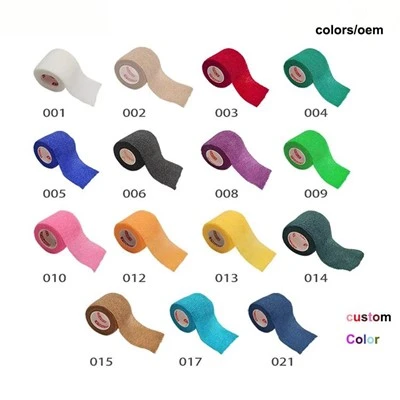
Review the supplier's existing veterinary range and the applications associated with each product. L WELL's Vet Wrap Bandages include nonwoven and spandex-based options, latex and latex-free choices, multiple widths, and solid or printed designs. These provide a useful starting point for checking whether the supplier's existing range matches the products your business intends to source.
Look beyond catalogue categories. Ask which products are regularly manufactured, which are developed for specific customer requirements, and whether the supplier can provide corresponding product specifications.
Compare Product Records with the Requirements You Intend to Approve
The product specification should identify the actual version being evaluated, including fabric construction, adhesive option, dimensions, stretch characteristics, and packaging. Where printed designs or private-label packaging are involved, the approved artwork and version should also be identifiable.
One detail worth checking is whether similar-looking variants are treated as separate products in the supplier's records. A latex-free cohesive bandage and another adhesive variant, for example, should not share an ambiguous specification simply because their dimensions are identical.
The approved specification will become the reference for production, inspection, and future orders. If the supplier cannot clearly identify that version, later discussions about product differences may become difficult.
Raw Material Sourcing and Adhesive Control
Examine Material Specifications and Incoming Inspection Records
Material descriptions such as "premium nonwoven" or "high-quality adhesive" are not sufficient for a supplier audit. Buyers need to see the specifications used to purchase and inspect the materials in the selected product.
Depending on the construction, incoming inspection records may cover fabric grammage, elastic ratio, tensile properties, adhesive viscosity, and solid content. The relevant checks should correspond to the materials actually used, rather than being presented as a generic list of laboratory capabilities.
Material batch identification is equally important. If the manufacturer buys similar fabrics or adhesives from different sources, it should be possible to identify which incoming batch was used in a particular production run.
Investigate How Material Changes Are Handled
Consider a supplier that changes its adhesive source because the original material becomes difficult to obtain. Even if the replacement has a similar description, it may behave differently during production or affect the cohesive performance of the finished bandage.
The supplier's change records should make clear:
- Who approved the substitution
- Whether the new material was evaluated before use
- Whether additional testing or sample approval was required
- Which product specifications or production batches were affected
- How the buyer was informed when the change affected agreed requirements
This is especially relevant to repeat-order and private-label programs. Without change control, a product approved several months earlier may no longer be made with exactly the same materials.
Product Testing and Quality Acceptance Criteria
A supplier may have testing equipment and inspection procedures, but buyers still need to establish whether the tests are relevant to the product being purchased. The distinction between checking raw materials and evaluating the finished bandage is important.
Identify What Each Test Measures
|
Test or inspection item |
What it helps evaluate |
|
Fabric grammage |
Fabric weight per unit area |
|
Elastic ratio |
Stretch characteristics of the fabric |
|
Tensile strength |
Resistance to pulling forces |
|
Water-resistance testing |
Resistance to water under the specified test method |
|
Adhesive viscosity |
Flow characteristics of the adhesive |
|
Adhesive solid content |
Proportion of solid material in the adhesive |
|
Self-backing or cohesive adhesion test |
Ability of the bandage to adhere to itself |
Not every test applies to every product variant. Fabric and adhesive checks may be performed on incoming materials, while self-backing tests are more directly related to the cohesive function of the finished bandage.
The test method also matters. A peel test using a steel plate evaluates adhesion to that surface; it does not independently demonstrate the bandage's ability to adhere to itself. Likewise, a water-resistance result should not automatically be described as proof that the finished bandage is waterproof.
L WELL outlines fabric, adhesive, and production-related inspection activities on its Quality Control page. During evaluation, buyers should identify which of these methods are relevant to the selected Vet Wrap product and request the corresponding records.
Examine the Test Report, Not Just the Result
A useful report should identify the tested product or material, sample or batch reference, test method, relevant conditions, measured result, and acceptance criterion.
The acceptance criterion is easy to overlook. A report showing a tensile-strength value, for example, does not tell the buyer whether the material meets the agreed requirement unless the applicable limit or specification is also available.
Where the supplier tests samples rather than every production batch, clarify the sampling frequency and how out-of-range results are handled. If a result fails, the records should show what happened to the affected material or product and whether further investigation was necessary.
Production Process Control and Batch Traceability
Review Controls at Key Production Stages
Veterinary cohesive bandage production may involve coating or gluing, rewinding, slitting, and packaging. The audit should establish how the supplier controls the operations relevant to the product, rather than simply confirming that these processes exist.
For example, adhesive application needs to follow defined process requirements. Rewinding and slitting must maintain the specified roll dimensions and presentation, while packaging needs to preserve correct product identification.
Production instructions and in-process records can show whether operators follow approved parameters and whether process adjustments are documented. A general statement that the factory conducts inspections provides much less insight.
Trace a Finished Batch Back to Its Records
Select a finished batch and ask the supplier to demonstrate how it is traced through production.
The identification should connect the finished goods with relevant material batches, production dates, processing records, and inspection information. This allows the manufacturer to investigate a complaint using actual records rather than relying on recollections from production staff.
Imagine a distributor reports that a later shipment has different cohesive behavior from an earlier batch. The supplier should be able to compare the material and production records associated with both shipments. If the batches cannot be traced properly, identifying the source of the difference becomes much harder.
Check How Production Deviations Are Managed
An audit should also cover what happens when production moves outside approved conditions. For example, if an adhesive application process deviates from its defined parameters, the supplier needs a documented way to assess the affected material or work in progress before it proceeds.
Look for records showing the deviation, the affected production, the decision made, and any follow-up inspection. Unrecorded adjustments leave buyers with little evidence that the finished goods still meet the approved specification.
Review Corrective Actions for Recurring Problems
Replacing a defective shipment may resolve an immediate commercial complaint, but it does not establish why the problem occurred.
Check whether the supplier investigates the cause, identifies potentially affected batches, records corrective measures, and verifies their effectiveness. Where similar issues recur, the investigation should consider whether material sources, production conditions, or previous corrective actions contributed to the problem.
Factory Capacity and Supply Continuity
Identify the Production Resources Supporting Your Order
A large factory does not necessarily have substantial capacity available for a particular veterinary cohesive bandage order. Buyers should distinguish overall company resources from the production arrangements assigned to their product.
L WELL reports a 23,000 m² facility, more than 100 employees, and over 20 production lines. These figures describe its wider manufacturing resources, not dedicated Vet Wrap production capacity. Its factory information provides background on the facility, but the buyer still needs to understand the actual processes and resources supporting the order.
Find out which relevant operations are handled in-house and which are outsourced. For outsourced stages, clarify who controls the work and how quality or scheduling problems are communicated.
Consider the Risks to Repeat Supply
A supplier may complete an initial order successfully but encounter difficulties when production demand increases or an important material becomes unavailable.
For repeat-order programs, examine how the supplier manages material replenishment, production scheduling, and disruptions involving key processes. If an essential operation depends on an external provider, the buyer should understand what happens if that provider cannot meet the agreed schedule.
The purpose is to assess whether the supplier's actual sourcing and production arrangements can support the expected supply program-not simply whether the factory can quote a delivery date.
OEM/ODM and Product Change Management
Review Development and Sample Approval Responsibilities
For customized products, the audit should establish who evaluates requested changes and how the resulting sample is approved.
A change to printed artwork may involve a different review process from a change to fabric construction or adhesive formulation. The supplier should be able to explain the technical work required and identify the person or team responsible for assessing the change.
L WELL's customization service describes support for product customization and development. For a specific project, buyers should still confirm the feasibility of the requested changes and the evidence required before approving the resulting product.
Confirm That Approved Versions Reach Production
An approved sample can lose its value if production uses an outdated specification or artwork file.
Check how revisions are identified and distributed to the relevant production and inspection teams. The current version should be distinguishable from superseded versions, and the records should show which version was used for the order.
This becomes particularly important when a private-label product has several revisions. A packaging change and a material change may require different technical checks, but neither should be introduced into production without the appropriate version record and approval.
Compliance and After-Sales Accountability
Verify the Scope of Certificates and Product Documents
A certificate displayed on a supplier's website should be checked against its actual holder, manufacturing site, scope, and validity period. A company-level management-system certificate does not automatically establish product approval, nor does a document covering one site necessarily apply to every production location.
The applicable regulatory classification and documentation requirements for veterinary cohesive bandages can vary according to the destination market and intended use. Buyers should identify the requirements for their own markets and confirm that the documents supplied are relevant.
Sustainability claims also need product-specific evidence when they form part of procurement requirements. A manufacturer's development of biodegradable materials, for instance, does not establish that every cohesive bandage in its catalogue uses those materials.
Establish Who Handles Product Complaints
The contracting company, manufacturing site, and other service providers may not always be the same entity. Buyers should establish who receives complaints, who investigates them, and who is responsible for communicating the findings.
A complaint record should identify the affected product and batch, describe the reported issue, and document the investigation and corrective action. If the problem could affect other shipments, the supplier should also explain how those batches are assessed.
The supplier's response should not end with a replacement shipment. Buyers need to know whether the underlying cause was investigated and whether the corrective measures were effective.
Turning Audit Findings into a Supplier Approval Decision
Distinguish Critical Gaps from Correctable Findings
Not every audit finding carries the same risk. Missing batch identification, unreliable traceability, test results outside agreed acceptance criteria, or documents that do not cover the relevant manufacturing site may prevent a buyer from establishing whether the supplier is suitable.
Other findings may be corrected before approval. Examples include incomplete records or unclear revision procedures, provided these gaps do not conceal a more serious problem with product conformity or traceability.
A single serious finding may matter more than several minor administrative omissions. The audit report should explain the potential impact of each issue rather than treating all observations equally.
Set Approval Conditions and Follow-Up Requirements
For findings that require corrective action, record the measure to be taken, the responsible party, the target completion date, and the evidence needed to close the issue.
Depending on the problem, this may involve revised procedures, updated production records, additional test results, or documentation showing that affected batches have been identified and assessed.
The final decision can be recorded as approved, conditionally approved subject to specified actions, or not approved. Conditional approval should remain tied to documented evidence; a verbal promise to address a problem later is not the same as a completed corrective action.
Conclusion
A supplier audit should leave buyers with a clear picture of how the selected veterinary cohesive bandage is specified, manufactured, inspected, and controlled. Product records, material traceability, relevant test results, and documented corrective actions provide a stronger basis for approval than general claims about factory size or quality management.
For businesses evaluating L WELL as a veterinary cohesive bandage supplier, the L WELL team can discuss product requirements and provide relevant manufacturing and quality information.