Introduction
Choosing latex-free vet wrap bandages involves more than finding a product with a latex-free label. For veterinary supply distributors, wholesalers, and private-label brands, the decision affects material declarations, adhesive performance, product consistency, and how the finished bandage is presented to customers. A product may use a latex-free adhesive, for example, but that alone does not establish that every component in the finished roll is covered by the same claim.
Buyers need to look at the complete construction, understand how the adhesive works with the backing material, and determine whether the manufacturer can maintain the approved formulation across repeat orders. Reviewing the construction of a cohesive vet wrap bandage provides a useful starting point. The following guide focuses on the formulation and sourcing decisions involved in adding latex-free vet wrap to a wholesale or private-label product range.

Why Latex-Free Matters in a Veterinary Bandage Range
Distinguish Latex-Free From Hypoallergenic
Natural rubber latex can be a concern for people with latex sensitivities. Offering a latex-free veterinary bandage may therefore help distributors serve customers who specifically look for products made without natural rubber latex.
However, latex-free and hypoallergenic describe different things. Latex-free refers to a material claim within a defined product scope. Hypoallergenic suggests a broader consideration of potential allergic reactions, and one term does not automatically establish the other. A bandage made without natural rubber latex may still contain other materials that cause sensitivity in some individuals.
This distinction should carry through to product descriptions, packaging, and sales materials. Avoid claims such as "allergy-proof" or "irritation-free" unless they are supported by appropriate evidence. For a distributor or brand owner, a precise statement about the materials used is more defensible and useful than a broad promise about how every user will respond.
Define Which Parts of the Finished Bandage Are Covered
A vet wrap is a composite product rather than a single material. Its construction may include a nonwoven backing, elastic fibers, a cohesive adhesive layer, and other production-related components. Confirming that one ingredient or the adhesive is latex-free does not necessarily establish the status of the entire finished bandage.
The scope of the declaration should therefore be clear before a product is listed or labeled. Does it cover the adhesive only, the backing and adhesive, or all relevant components of the finished roll? This is particularly important for private-label brands, which may use supplier information to prepare their own packaging and product claims.
Ask the manufacturer to identify the materials covered by the declaration and provide documentation for the specific construction being purchased. If different versions use different backing or adhesive options, treat their declarations separately rather than assuming that one statement applies to the whole product range.

What to Examine in the Bandage Construction
Look Beyond the Latex-Free Adhesive Claim
The adhesive system deserves close attention because it determines how a cohesive bandage bonds to itself. When sourcing a latex-free version, buyers should establish whether the proposed adhesive formulation contains natural rubber latex and whether the manufacturer can document the materials used.
Do not assume that all latex-free cohesive adhesives share the same composition. The term describes a material requirement, not a particular chemical formulation. If the adhesive composition matters to your product specification or market requirements, request the relevant information directly from the manufacturer instead of inferring ingredients from a product description.
It is also worth discussing whether the same adhesive option can be maintained across different product variants. A supplier may offer several constructions, but the material declaration and approved specification should identify the actual version intended for your order. For projects involving specific fabric or adhesive requirements, L WELL's work in fabric and adhesive development is relevant to the discussion of material selection and product customization.
Assess Cohesive Performance During Handling
A latex-free adhesive still needs to perform as part of a practical cohesive bandage. It should bond to itself when layers overlap, while remaining manageable during unwinding and application. Excessive bonding can make a roll difficult to handle; insufficient cohesion may affect how securely the layers stay together.
These characteristics are best judged through samples rather than by relying on a single adhesive specification. Compare how easily the roll unwinds, how the material behaves when stretched, and whether overlapping layers form a consistent bond. The aim is not simply to find the strongest adhesion, but to find a balance that suits the intended product and user.
This distinction matters when comparing manufacturers. Two products may both be described as latex-free, yet feel noticeably different during application because of their adhesive systems or the way those systems interact with the backing.
Check the Backing Material and Elastic Structure
The backing contributes to the bandage's stretch, recovery, softness, and handling. L WELL's vet wrap range uses a nonwoven and spandex construction, with material and elastic proportions available for customization.
For buyers, the important question is how the backing performs as part of the complete construction. A change in nonwoven structure or spandex content can alter the feel and stretch of the finished roll. The adhesive must also work consistently with the selected fabric; assessing either material in isolation will not give a complete picture of the product.
Several properties can help buyers compare proposed constructions:
|
Property |
Why it matters |
|
Nonwoven structure |
Influences surface feel and the consistency of the backing |
|
Spandex content |
Affects stretch and recovery |
|
Grammage |
Helps assess material weight and production consistency |
|
Tensile strength |
Indicates resistance to pulling during handling |
|
Adhesive compatibility |
Helps determine whether the coating works consistently with the backing |
A supplier should be able to explain how changes to these properties affect the finished bandage. This is especially useful when a brand wants a particular balance of stretch and handling rather than simply choosing the lowest-cost material combination.
Consider the Complete Formulation When Making Changes
Adhesive and backing choices should not be treated as independent decisions. A change to one part of the construction can affect the behavior of the finished roll, even if the other materials remain unchanged.
For example, changing the adhesive while keeping the same nonwoven backing may alter unwinding or self-adhesion. Adjusting the elastic proportion may also change how the coated material behaves when stretched. For this reason, a latex-free version should be evaluated as a complete construction, not approved solely because its individual materials appear suitable.
This is also why a supplier should record the agreed material combination. The approved version needs to be identifiable so that subsequent samples and production batches can be compared against the same specification.


How to Evaluate the Finished Latex-Free Vet Wrap
Assess Samples as Complete Rolls
Once the proposed materials have been selected, evaluate the finished roll rather than relying only on separate material descriptions. A useful sample review should consider appearance, unwinding, stretch, self-adhesion, and consistency between rolls.
Start by checking whether the fabric and coating appear uniform. Then handle several rolls from the sample set, noting differences in feel, stretch, roll tightness, or bonding. If the bandage is intended for private-label distribution, assess the packaging and product presentation at the same time. These details can affect how easily the product fits into an existing catalog or retail range.
The sample should represent the actual construction intended for production. Keep an approved sample and its corresponding specification as a comparison point for future orders. This is more useful than approving a general sample that may use a different adhesive or backing combination from the one eventually supplied.
Understand Which Quality Checks Support Consistency
Sample approval establishes what the buyer expects; production quality control helps determine whether repeat orders can maintain that standard. For vet wrap, relevant checks may include grammage, elastic ratio, tensile strength, water resistance, adhesive viscosity, and adhesive solid content. Rewinding controls also affect roll diameter, tightness, and length, while slitting checks help maintain width consistency.
Not every check has the same importance for every product. Buyers should focus on the properties that directly affect their approved construction and ask how the manufacturer monitors them during production. A list of inspection items is useful only when it is connected to actual controls, acceptance criteria, and the handling of nonconforming products.
When reviewing a supplier's inspection arrangements, look for a process that covers incoming materials, production, and finished rolls. L WELL's production quality checks provide a starting point for discussing how material and finished-product consistency are managed.


Plan a Product Range Around Your Market
Select Variants That Serve a Clear Sales Purpose
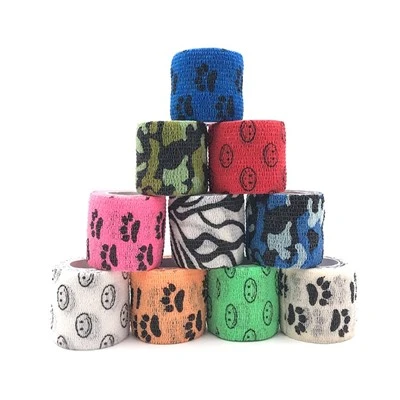
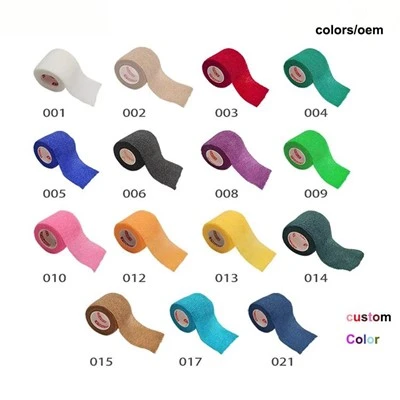
A latex-free product line does not need to include every possible size, color, or packaging format. The right assortment depends on the customers a distributor serves and whether the product will be sold as a standard wholesale item or developed for a particular brand.
L WELL's standard vet wrap options include widths of 2.5, 5, 7.5, 10, and 15 cm, with a standard length of 4.5 m. These options can support initial range planning, while customized dimensions may be discussed when a project has specific requirements. Rather than adding multiple variants without a clear reason, consider which formats your customers are likely to stock and reorder.
For a wholesale range, consistency and straightforward replenishment may matter more than a large number of product variations. A private-label project may place greater emphasis on branded packaging, product appearance, or a particular material combination. In either case, each SKU should have a clear specification so that the product supplied matches the version described in the catalog.
Keep Labels Aligned With the Approved Product
Once the construction and range have been selected, make sure the product description reflects the actual version being manufactured. The latex-free statement on the packaging should match the supplier's declaration, and different formulations should not share an identical claim unless the documentation supports it.
This becomes especially important when a range includes more than one adhesive or backing option. If a formulation changes, review the affected product information before carrying the existing wording over to the new version. The same principle applies to website descriptions and distributor sales materials: all should refer to the approved construction rather than a general product family.
Packaging customization can be considered alongside material selection, but the two should be coordinated. L WELL's custom bandage options can be discussed in relation to the required materials, dimensions, branding, and packaging format.


What to Verify Before Choosing a Manufacturer
Request Documentation That Matches Your Product
A general statement that a manufacturer produces latex-free bandages is not enough for a sourcing decision. Buyers need documentation that identifies the product version and supports the claim they intend to use.
At a minimum, discuss the material declaration, product specification, and any relevant supporting documents required for the destination market. The declaration should make the scope of the latex-free claim clear, while the specification should identify the agreed backing, adhesive, and other relevant construction details. If a particular test report or certificate is required, specify it during supplier evaluation rather than assuming it is available for every product.
It is equally important to keep these documents connected to the approved sample. A declaration for one adhesive formulation should not be used to support a different construction simply because the product name is unchanged.
Check How the Manufacturer Manages Changes
Material consistency is not only a matter of inspecting finished rolls. Buyers should also understand what happens when a raw material, adhesive formulation, or production process changes.
Ask whether the manufacturer records the approved construction, how changes are reviewed, and whether customers are informed when a change could affect the product's material declaration or performance. For private-label orders, agree on how revised samples and specifications will be approved before a changed version enters production.
This is particularly relevant for latex-free products because a change in material sourcing may affect the scope of the original claim. A supplier with a clear change-control process makes it easier to maintain consistency between the product evaluated at the beginning of a project and the bandages delivered in later orders.

Conclusion
Selecting latex-free vet wrap bandages requires a clear understanding of the complete product, from the scope of its material declaration to the way its adhesive and backing work together. Buyers should assess the finished roll, establish which production checks support consistency, and make sure the supplier can document and control the approved construction.
For distributors and private-label brands, the goal is not simply to add a latex-free label to an existing product. It is to source a bandage whose materials, performance, documentation, and product presentation remain aligned across repeat orders. If you are developing a latex-free vet wrap range, discuss your latex-free vet wrap project to explore suitable material, adhesive, and packaging options.